Choosing the Right Vehicle for a Namibia Self-Drive Safari
Selecting the right vehicle is one of the most important decisions when planning a Namibia self-drive safari. While Namibia’s main highways are paved and generally easy to drive, many of the country’s most iconic destinations are accessed via gravel roads, sandy tracks, or remote desert routes.
For travelers following popular routes such as Windhoek, Etosha, Damaraland, Swakopmund, Sossusvlei, a high-clearance SUV is often sufficient if driving cautiously. However, many experienced travelers prefer renting a 4×4 vehicle, particularly if the itinerary includes remote regions such as Kaokoland, the Skeleton Coast, or the gravel passes leading into the Namib Desert.
A 4×4 vehicle offers several advantages during a Namibia road trip. Higher ground clearance helps absorb rough gravel sections and corrugations, while four-wheel-drive capability becomes useful when encountering sandy roads near desert regions or coastal areas.
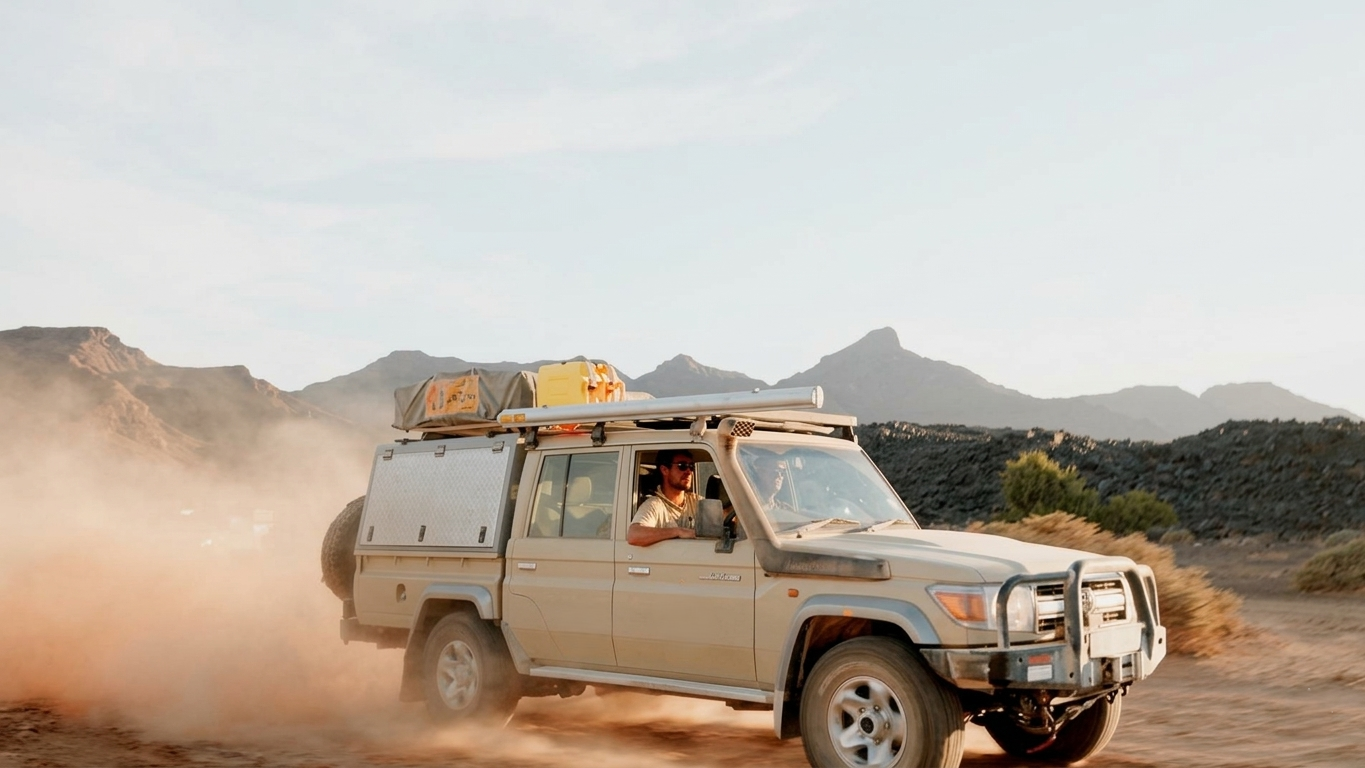
Many safari-equipped rentals also include practical expedition features such as roof racks, dual spare tyres, recovery gear, and rooftop tents for travelers planning to camp during their Namibia self-drive safari.
Common Vehicles Used for Namibia Self-Drive Safaris
Most rental fleets operating in Namibia rely on durable off-road vehicles specifically designed for long-distance gravel travel.
These vehicles are widely used by overland travelers across Southern Africa and are commonly equipped with dual spare tyres, recovery gear, and camping equipment for extended journeys.
Choosing a reliable vehicle from a reputable rental provider is essential in Namibia, as distances between towns can be significant and mechanical support may be limited in remote regions.
Fuel Stations and Refuelling Strategy
Fuel planning is an essential part of preparing for a Namibia self-drive safari. Although Namibia has a reliable network of fuel stations in towns and along major highways, distances between stops can be considerable, especially when travelling through remote regions.
Most major towns such as Windhoek, Otjiwarongo, Swakopmund, and Outjo provide reliable fuel access. Once travelers move into sparsely populated areas such as Damaraland, the Skeleton Coast region, or southern Namibia, fuel stations become less frequent and operating hours may be limited.
For this reason, experienced travelers generally follow a simple rule: refuel whenever fuel is available rather than waiting until the tank is nearly empty.
Namibia’s road network is supported by several major tourism hubs such as Windhoek, Swakopmund, Walvis Bay, and neighbouring overland gateways like Maun or Kasane. These towns typically provide reliable fuel stations and supply points for travelers undertaking long-distance self-drive safaris across Southern Africa.
Navigation and Maps for Namibia Road Trips
Navigation during a Namibia self-drive safari is generally straightforward, but having the right tools significantly improves safety and travel efficiency.
Namibia’s highways and tourism routes are clearly marked with road signs, but many secondary roads and desert tracks have limited signage.
Many travelers rely on offline GPS navigation apps that function without mobile signal. Because large areas of Namibia have limited cellular coverage, downloading maps in advance is strongly recommended.
Many rental companies provide dedicated GPS devices loaded with Tracks4Africa maps, a navigation system widely used by overland travelers across Southern Africa. Some operators also offer satellite phones or two-way radios for travelers exploring extremely remote regions where mobile coverage is limited.
While digital navigation tools are helpful, many experienced travelers still carry a physical Namibia road atlas to visualize longer routes, fuel stops, and alternative driving options.
Best Time of Year for a Namibia Self-Drive Safari
Namibia can be visited year-round, but understanding seasonal conditions helps travelers choose the best time for their Namibia self-drive safari.
The dry season from May to October is widely considered the best time for wildlife viewing. During these months, rainfall is minimal and animals gather around waterholes, particularly in Etosha National Park.
Temperatures during the dry season are generally comfortable during the day, although mornings and evenings can be surprisingly cold in desert regions.
The summer months from November to April bring warmer temperatures and occasional rainfall. While this period can be hotter, it also transforms Namibia’s landscapes as desert areas briefly become greener and migratory birds arrive.
Rental fleets across Namibia typically see peak demand between July and October when wildlife viewing conditions are excellent and road conditions remain stable for long-distance travel.
CRRT Recommendation
For travelers planning a Namibia self-drive safari, choosing the right vehicle and navigation tools can dramatically improve the overall experience. At Car Rental Road Trips (CRRT), we recommend selecting a well-maintained 4×4 vehicle equipped with dual spare tyres, recovery equipment, and reliable navigation, such as Tracks4Africa or offline GPS maps. Namibia’s landscapes are vast, and having the right vehicle and planning fuel stops in advance ensures travelers can explore remote regions like Damaraland, the Skeleton Coast, and the Namib Desert safely and comfortably.