
Botswana Camping & Self-Drive Safari Beginner’s Guide by CRRT


Planning Your Botswana Camping & Self-Drive Safari (Timing, Permits & Park Rules)

Planning a Botswana Camping & Self-Drive Safari begins with understanding how the seasons shape road conditions, wildlife density, and campsite availability. The dry months (June–October) offer firm tracks, predictable river crossings, and the clearest game-viewing, but campsites in Moremi, Savuti, and Khwai must be locked in months ahead. The green season transforms the landscape, lush, dramatic, and quieter, but requires a confident 4×4 driver due to mud, flooded pans, and shifting tracks.

For national parks and community concessions, secure all entry permits before arrival. Botswana is strict on pre-booked campsite proof at gates. Independent overlanders on a Botswana Camping & Self-Drive Safari should also understand private concession rules: no driving after dark, no off-track detours, and a maximum 40 km/h in wildlife zones where elephants, lions, and wild dogs use the same roads you do.

Choosing the Right 4×4 for Your Botswana Camping & Self-Drive Safari

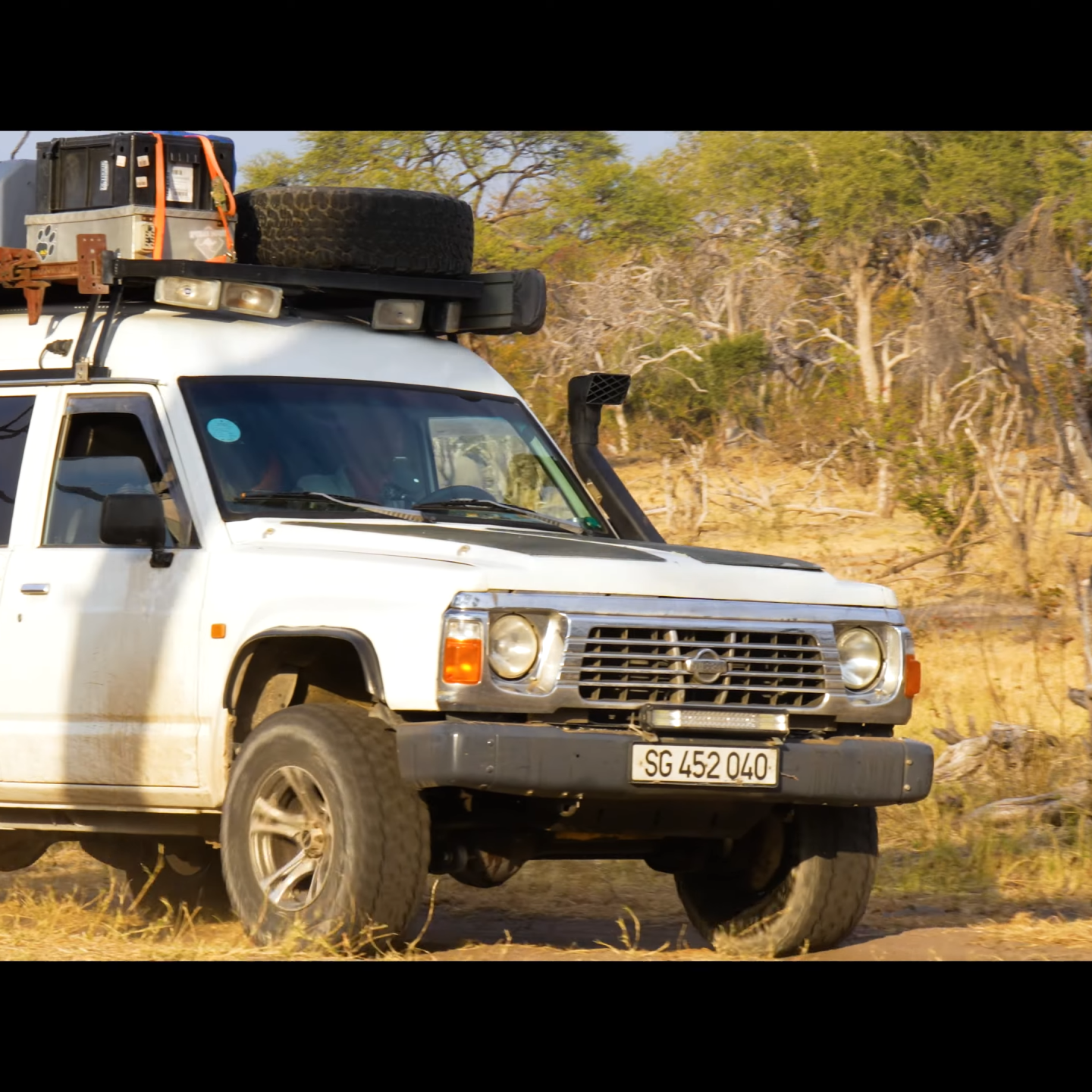
Selecting a reliable vehicle is the backbone of any Botswana Camping & Self-Drive Safari. The terrain demands more than clearance; you need torque, low-range gearing, and cooling systems that hold steady in 40°C heat. A Land Cruiser 76/79 or Hilux Double Cab handles deep sand in Savuti, the rough cutlines along Chobe, and water crossings on Moremi’s seasonal routes. Solo travelers or couples on a lighter budget can still thrive with a RAV4 or Prado only when staying on main gravel routes (Nata–Maun–Kasane).
Essential 4×4 Setup for Botswana Camping & Self-Drive Safari

Vehicle Setup Priorities
  • All-terrain tires (avoid highway tires that fail in deep sand)
  • Dual battery system to keep the fridge running day and night
  • Roof-top tent or ground tent based on mobility preference
  • Hi-lift jack, recovery tracks, tire inflator for sand and uneven ground
  • Snorkel if traveling during the wet season or crossing seasonal channels

A well-prepared 4×4 doesn’t just improve comfort, it shows readiness at park gates and gives you the confidence to handle soft sand, elephant roadblocks, and long remote stretches safely.

Botswana 2 – 3 Week Ultimate Itinerary | Self Drive 4×4 Road Trip & Travel Guide

Packing & Preparation Checklist for Your Botswana Camping & Self-Drive Safari

A strong packing plan is what transforms a good trip into a smooth one on a Botswana Camping & Self-Drive Safari. Campsites are unfenced, distances are long, and resupply points are limited. Prioritize gear that keeps you independent for 2–4 nights at a time.

Essential Camping Gear for Botswana Self-Drive Safaris

Practical Camping Essentials
  • 2x gas bottles or burners: ideal for cold mornings & no-fire zones when predators are nearby
  • LED campsite lighting + spare batteries
  • Folding chairs & table that pack compactly
  • Heavy-duty cooler or fridge
  • Warm sleeping bags rated for desert-cold nights (Botswana drops fast after sunset)

Safety & Recovery Gear
  • First-aid kit with dehydration salts & antihistamines
  • Tow rope + recovery tracks
  • Tire repair kit + air inflator
  • 20–40L extra water per person (drinking + washing)
  • Fire extinguisher reachable from the driver’s seat

Food & Water Strategy
  • Stock up in Maun or Kasane before entering remote areas.
  • Carry long-lasting foods for multi-night stays deep in the bush: pasta, rice, canned meals, nuts, powdered milk.
  • Freeze meat before departure, it stays fresher for longer in the Delta heat.

Well-planned supplies turn a Botswana Camping & Self-Drive Safari into a confident, safe adventure, especially when far from towns, fences, and fuel stations.

Fully Equipped 4x4 Nissan Self-drive in Botswana with CRRT (Car Rental Road Trips)

Understanding Botswana’s Wild Campsites (What First-Timers Don’t Expect)

Botswana’s campsites are some of the wildest in Africa, and that is exactly their appeal. There are no fences, no warning systems, and no rangers patrolling at night. What you experience is the raw version of a Botswana Camping & Self-Drive Safari, wildlife moving freely through camp, absolute silence after sundown, and the need to trust your senses.

At night, the rhythm of the camp changes. Hyena will test anything left outside, elephants may pass through quietly, and lions sometimes use sand roads as their night routes. This isn’t something to fear; it’s something to respect. A first-time visitor often thinks “the animals will keep their distance,” but in Botswana, they don’t. They take the straightest route to water or shade, and your campsite may simply be on their path.

The rule that protects you is simple: be calm, be predictable, and never run. Stay close to your 4×4, move with intention, and avoid shining bright lights directly into animal eyes. Most problems happen because people panic, not because wildlife seeks conflict.

Daily Camp Routine: How Overlanders Stay Safe & Comfortable

  • Your daily rhythm on a Botswana Camping & Self-Drive Safari should follow the natural cycle of the bush. Mornings start early, before sunrise if possible. This is when light is soft, wildlife moves, and temperatures are friendly. It’s the best time to break camp, check tire pressure, refill water, and scan the vehicle for anything you might have dropped in the dark.
  • Midday is for movement or rest: If you’re driving, keep your route flexible because deep sand heats up and becomes harder to navigate. If you’re already in camp, keep a low profile: stay in the shade, reduce noise, and avoid wandering too far. Predators often rest near the edges of campsites, using the shade of vehicles and trees, so treat every bush like it could be occupied.
  • Evenings require the most discipline: Set up cooking gear before sunset, finish prep while you can still see clearly, and put everything away immediately after use. No leftovers, no scraps, no washing up left outside, hyenas investigate everything. Once darkness falls, limit movement, keep your headlamp on low, and stay within a few steps of the vehicle. The best way to enjoy the night is quietly: listen more than you move.

Wildlife Awareness: How to Read Animal Behaviour in Camp & On the Road

Botswana rewards travelers who pay attention. Most incidents happen because someone misreads an animal’s intentions or doesn’t read them at all. On a Botswana Camping & Self-Drive Safari, understanding behaviour becomes as important as navigation.

  • Elephants communicate with silence: A relaxed elephant feeds steadily, swings its trunk loosely, and blinks often. A stressed elephant stiffens, freezes, or spreads its ears slightly, not yet a threat, but a warning to back off. Never rev your engine or flash your lights; simply give them space and wait.
  • Lions behave like royalty: They own the road, the shade, the paths between campsites. If you find lions blocking your way, stay in the vehicle and wait. They eventually move. A lion that stares intently, growls softly, or paces is telling you that you’re too close, even if you’re inside the car.
  • Hyenas are opportunists: In camp, they follow smells, not people. They search quietly, almost politely, until they find something. The simplest defence is good housekeeping.

The more time you spend watching animals, the safer you become. Patterns replace fear, and instinct becomes your guide. Botswana isn’t a theme park; it’s a living system that responds to your energy, your choices, and your respect.

The Reality of Driving Deep Sand & Water Channels in Botswana

Driving in Botswana is not like driving in other safari countries. This is where many overlanders learn the difference between “4×4 mode” and the actual 4×4 technique.

  • Deep sand is the most common challenge: The key is momentum, not speed, but steady forward motion. Lower tire pressures early, not after you’re stuck. Most beginners hesitate to drop below 1.6 bar, but Botswana’s sand often requires 1.4 or even 1.2, especially around Savuti, Khwai, and deep Moremi tracks. A light touch on the wheel, soft steering corrections, and looking ahead for escape paths make all the difference.
  • Water crossings require judgment: Depth changes daily, and the first mistake is assuming a puddle is shallow. The second mistake is following another vehicle’s line without assessing your own. If you’re unsure, walk the shallow edges, look for exits, and remember that Botswana wildlife uses water channels too; fresh elephant tracks indicate deeper sections than expected.
  • The final reality getting stuck isn’t failure. Every experienced overlander has been bogged down at least once. What matters is recovery technique, stopping early before digging yourself deeper, clearing sand with your hands or shovel, and using tracks strategically instead of spinning tires. Confident, patient recovery is a defining part of the Botswana self-drive experience.

Navigation in Botswana: Why You Need Multiple Tools (Not Just Google Maps)

Navigation in Botswana is a different discipline. Roads change with seasons, animals modify tracks, and local detours appear overnight. Relying on a single tool, especially Google Maps, is a fast route to getting lost or delayed.

  • Tracks4Africa (T4A) is your main overlanding companion. It isn’t perfect, but it understands Botswana’s real paths, deep sand, river loops, dead ends, and seasonal access routes. It’s built from years of actual overlander data, not satellite assumptions.
  • Garmin GPS units add reliability. They don’t depend on mobile coverage, and they handle remote regions with fewer glitches.
  • Maps.me is useful for quick reference when T4A feels vague, especially in towns or around community campsites, but it lacks judgment on road conditions.

The golden rule: If two navigation tools disagree, trust the one that matches what you see on the ground.
Fresh elephant tracks, wet sand, deep ruts, these tell the truth. Technology just assists. Use tools as a guide, not a guarantee. In Botswana, intuition often leads better than any mapping app.

Botswana is a landlocked Southern African country known for the vast Kalahari Desert and the wildlife-rich Okavango Delta, which flourishes during annual floods. Its Central Kalahari Game Reserve features fossilized riverbeds, sweeping grasslands, and abundant wildlife, including giraffes, cheetahs, hyenas, and wild dogs.

The Most Overlooked Skills: Water, Fuel & Distance Planning

Water Essentials

Carry 20–40 litres per person for remote areas: Botswana’s heat dehydrates quickly, and wildlife camps rarely have reliable taps. Use water for drinking first, washing second, and radiator cooling only in emergencies. Proper planning ensures comfort and safety on your Botswana Camping & Self-Drive Safari.

Fuel Planning

Fill up in Maun, Kasane, Nata, or Rakops: Carry extra jerrycans for long loops in Moremi, Savuti, or the Kalahari. Deep sand increases fuel consumption. A smart rule: if you are halfway through your tank, you should already be near your next resupply point. This strategy avoids unnecessary stress in remote areas.

Distance & Timing

Be realistic about driving times: A section that looks like 4 hours on the map can take 8 in deep sand, or longer if wildlife blocks your route. Always plan to reach camp with daylight to spare. Ask yourself: Can I finish this section safely before dark? Is there a backup if delayed? Where is the nearest safe stopping point? Smart timing keeps your Botswana Camping & Self-Drive Safari safe, enjoyable, and stress-free.

Strategic water, fuel, and timing planning is what separates a confident overlander from a stressed traveler, and ensures your Botswana adventure is remembered for its freedom, not emergencies.

Beginners’ Route: Maun to Khwai to Mababe to Savuti to Chobe to Kasane

Route Overview & What to Expect

This loop builds confidence progressively: from predictable tracks around Maun and Khwai to the deeper sand and iconic wildlife of Savuti and Chobe. It’s an ideal introduction to a Botswana Camping & Self-Drive Safari, giving you a real taste of overlanding without throwing you into the most technical sections on day one.

Day-by-Day Breakdown
Day 1: Maun to Khwai (Magotho)
  • Driving: 3–4 hours
  • Terrain: graded gravel to light sand
  • Camp style: open woodland
  • Difficulty: ★★☆☆☆
Ease in here: short drives, early animal sightings, set-up practice for tents, fridge, and charging systems.
Day 2: Full Day Khwai
  • Driving: optional 5–7 hours game loops
  • Terrain: riverine tracks & shallow seasonal crossings
  • Difficulty: ★★★☆☆
Practice safe water crossings, reading tracks, and staying calm in close encounters.
Day 3: Khwai to Mababe Depression
  • Driving: 2–3 hours
  • Terrain: wide pans, clay, pockets of sand
  • Camp style: community wild camps
  • Difficulty: ★★★☆☆
Soft sand discipline: lower tyre pressures, keep momentum, and practice gentle recovery techniques.
Day 4: Mababe to Savuti
  • Driving: 4–6 hours
  • Terrain: deep sand corridors & rough patches
  • Camp style: structured national park sites
  • Difficulty: ★★★★☆
Expect deeper sand and more challenging line, patience and steady technique win the day.
Day 5: Savuti to Chobe to Kasane
  • Driving: 5–7 hours
  • Terrain: sand to gravel to tar
  • Camp style: riverside camps or Kasane lodges
  • Difficulty: ★★☆☆☆

The final stretch eases up. Enjoy riverfront wildlife and the comforts of Kasane after a true overland loop.

Quick Route Tips
  • Plan to arrive at camp with daylight to spare, packing or breaking camp in the dark invites mistakes.
  • Monitor tyre pressures at every major terrain change (3 bar tarmac to ~2 bar gravel to 1.2–1.8 bar sand).
  • Keep your fuel topped up in Maun/Kasane and carry jerrycans for long loops in Moremi, Savuti, and Mababe.
  • Practice basic recovery (sand tracks, shovel use) in a quiet spot before you need them for real.

CRRT Advice: Patience, Preparation & Respect

Calm, practical guidance for first-time overlanders
  • Go slow: The tracks will tell you what to do, if sand deepens, slow and steady is your best strategy.
  • Preparation beats strength: Correct tyre pressures, dual batteries, a good fridge, recovery tracks and basic tool knowledge matter far more than aggressive driving. A well-prepared vehicle signals competence at park gates and gives you the confidence to handle soft sand, elephant blockades, and long remote stretches safely.
  • Respect wildlife: Keep distance, avoid loud lights at night, and never block an animal’s route. Photographs are secondary to safety.
  • Layer your navigation: Use Garmin for reliable routing, Tracks4Africa for overland lines, Maps.me as a quick backup, and always trust what you see on the ground over any app.

You don’t need to be an expert to have an expert-level experience. Botswana teaches in kilometres and camp, patience, preparation, and respect will get you to the other side with stories you’ll tell for years.

Need help planning?

Car Rental Road Trips offers fully equipped 4×4 vehicles and starter briefings to make your first Botswana Camping & Self-Drive Safari confident and comfortable. Book with CRRT Now